
美姐
Proposed US rule barring China science collaboration sparks outcry from US scientists_我的网站

一 | 受第13号台风“白海豚”影响,昨天,机场取消数百架次航班,铁路动态调整列车运行,地铁高架段临时停运,公交紧急上线免费接驳……一场与台风赛跑的保障行动全面展开。据机场相关人员介绍,受“白海豚”影响,8月9日已取消进出港航班388架次。预计今天还会有部分航班取消,取消的进出港航班主要集中在今天10:00前,10:00以后机场运行有望全面恢复。
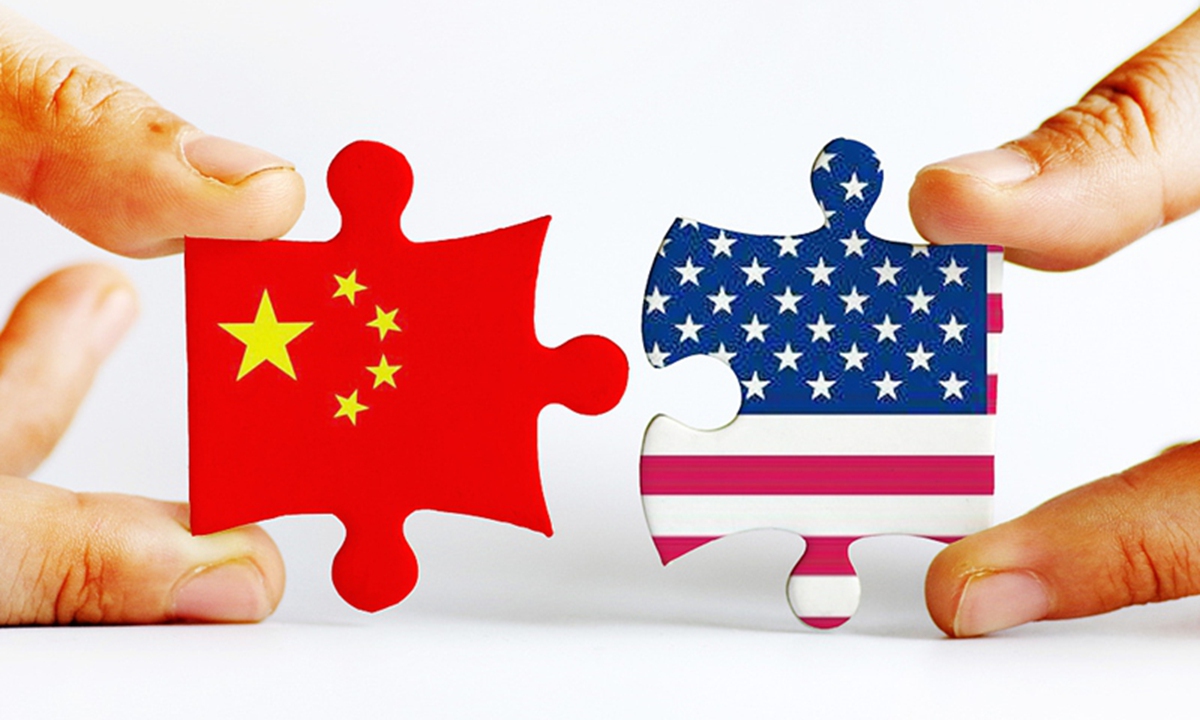
The proposed Office of Management and Budget (OMB) rule, set to take effect in December, would mark one of the biggest overhauls of US science funding in decades, giving political appointees greater authority over grant awards previously guided by scientific peer review and requiring that they "advance the President's policy priorities," according to the Washington Post.
It would also effectively expand the 2011 Wolf Amendment, which bars scientists from using NASA funding for bilateral collaborations with China, to all federal agencies and scientists receiving federal funds, marking the largest break in US-China scientific engagement in decades, the US media outlet reported.
So far, the proposed rule has garnered nearly half a million public comments, many from scientists and leading US science bodies. A Washington Post analysis of 50,000 of those comments found that around 88 percent were negative.
The rule, initially set to take effect in October, was pushed back to December after a bipartisan stopgap funding bill temporarily halted its adoption. Unlike the Wolf Amendment, the rule does not require congressional approval to take effect.
"I do think there are still members of Congress who think we have a monopoly on knowledge. They think we're still in the Cold War Soviet era ... where we were ahead in most areas of science and technology. That is not the case with China. We are no longer the leader in many areas of science," said Tobin Smith, senior vice president for government relations and public policy at the Association for American Universities, which advocates on behalf of leading US research universities, per the Washington Post.
Scientists warn that the rule risks subjecting long-term scientific research to four-year political cycles. "We will not succeed if with every new administration we are ping-ponging back and forth about priorities," the American Association for the Advancement of Science said in a blistering comment, urging the administration to withdraw the rule. "Fast-tracking such profound changes ... hands an easy victory to nations like China," it said, the Washington Post reported.
This reflects a fundamental divide between the US government and the scientific community over how science should develop, Wang Yiwei, a professor at Renmin University of China's School of International Studies, told the Global Times. He noted that politicians tend to believe that suppressing China as a competitor would allow the US to preserve its market dominance and technological edge.
Scientists, however, tend to follow a different logic, as scientific progress depends on openness, exchanges and collaboration. If science and technology are driven solely by competition and private capital, with the ultimate goal of maintaining technological monopolies, this could create greater risks and ultimately undermine US interests as well, Wang said.
The proposed rule change is the latest salvo in a broader battle in Washington over how to respond to China's rise as a scientific superpower. In July, the US National Science Foundation (NSF) also moved to ban collaborations between scientist it funds and many Chinese research institutions and their employees, according to Science magazine.
Liu Shaoshan, director of the Center for Embodied AI at the Shenzhen Institute of Artificial Intelligence and Robotics for Society and a former US-based researcher, told the Global Times in a previous interview that the NSF's new proposed rules created a "talent wall," arguing that restrictions based on nationality, institutional affiliation, and research partnerships could reduce the global talent pool available to the US, weaken its ability to attract leading scientists, and slow scientific innovation.
Liu also said scientific advancement relies not only on discovery but also on the exchange, validation, and dissemination of knowledge.
Wang also said China has built significant strengths through its vast pool of scientists and engineers, complete industrial chains and massive application scenarios, while increasingly moving from application-oriented innovation toward original research. Against this backdrop, US technological blockades and restrictions on cooperation are unlikely to halt China's progress, but could instead isolate American scientists from China's latest research and collaboration opportunities. Such an approach could also prevent the two countries from leveraging their respective strengths and ultimately undermine US competitiveness, Wang said.
。杭州机场地勤部值班主任雷献君提醒,目前航班取消较多,不少旅客未能及时关注到取消信息,建议出发前,及时联系航司查询航班动态,避免耽误行程。如遇航班取消,请及时与航空公司联系改签,调整出行行程,也可拨打机场客服热线0571-96299进行咨询。铁路方面,截至目前,铁路部门对今天沪昆高铁、杭温高铁、杭衢高铁、金建高铁兰建段、杭昌高铁、金温铁路、金台铁路、衢九铁路、沪昆铁路、萧甬铁路,今天到明天衢宁铁路、甬金铁路,今天至12日金千铁路,今天至13日皖赣铁路,今天到明天合九铁路、铜九铁路、庐铜铁路等部分区段部分时段途经列车,采取临时停运措施。不过,随着台风移动趋势变化,铁路部门也做出“弹性调整”——今天10时起,杭深铁路杭州至宁波段将陆续恢复通车;12时起,杭台高铁(含温玉段)和杭深铁路宁波至苍南段也将逐步恢复,尽可能减少对旅客出行的影响。根据防台风Ⅱ级应急响应要求,杭州地铁发布公告表示,昨日14时起,9号线和19号线高架段率先停运;17时起,16号线高架段也加入停运行列。为配合地铁高架段停运,杭州公交集团火速开启应急接驳模式,专门开通三条临时免费接驳线路。
Current article:http://hbgga.chaochangkuanbandangyogeseng.sbs/list_npb9fi/f73.html
Published on:07:33:32
最新文章
- 京津冀体彩责任彩票培训师交流培训会在津顺利举办
- Tiger Shroff Films That Shaped His Journey in Bollywood
- 9部门发文激发下沉市场活力 活跃县域消费
- 美记:上半场95%时间里火箭能与勇士抗衡 5%的时间里被他们碾压
- Alia Bhatt reflects on her decade-long career at the Red Sea Film Festival
- 2025年618活动什么时候开始6月16日20点最便宜?淘宝京东618最新红包口令和满减优惠如何?
- 'सर अश्लील मैसेज भेजते थे...', अंबाला में प्रिंसिपल पर छेड़छाड़ का लगा आरोप, स्कूल में जांच करने पहुंची पुलिस टीम
- 电竞世俱杯70%收入靠赞助,距离足球世界杯有多远?
- 黄山栾开花 银杏果变黄 一起寻找秋天的信号吧
- 莫雷托:尤文过去几天再次询问齐尔克泽情况,球员预计将离开曼联
标签云
热门文章
- 《GTA6》葱哥让玩家去R星总部闹事!玩家吵翻
- 美媒:076最让人担忧的不是电磁弹射,而是其恐怖的生产速度!
- 小米首发!高通第六代骁龙8超级至尊版主频突破5GHz:史无前例
- DOP Vikash Nowlakha Reveals How Aditya Dhar and He Built The Look of Dhurandhar
- 2025年618和国补可以叠加吗?618从6月17日晚8点开始最便宜
- 富士康:未来希望代工特斯拉汽车 先定个小目标
- 2026年“左宗棠与边疆治理”学术研讨会在新疆哈密举行
- 宇树科技市值,一天跌超200亿,宇树科技市值,一天跌超200亿
- Does China’s weak domestic demand really lead to excess capacity?: People's Daily
- 给近三年最好的10部年代剧排个名:《人世间》第6,第1名没有争议