东方朔
“여성들이여 연대하고 목소리 내라”…대기업 최초 여성 CEO의 조언_我的网站

一 | Editor's Note:
With China's population of seniors over 60 surpassing 300 million, ensuring a happy and fulfilling life for all seniors has become a pressing issue for both families and the nation. How can the new generation of seniors in China break away from traditional norms and embrace a different lifestyle, supported by AI technology, multiculturalism and an elder-friendly society?
The series "Old Age, New Trends" explores emerging trends in the silver economy, creative social norms among senior citizens and innovative eldercare services. It examines the opportunities and challenges presented by an aging society, highlighting the diverse lifestyles of seniors and the booming eldercare industry in China. Beneath these new trends lies a reflection of Chinese modernization, which aims to provide more secure systems and dignified lives for its senior population.
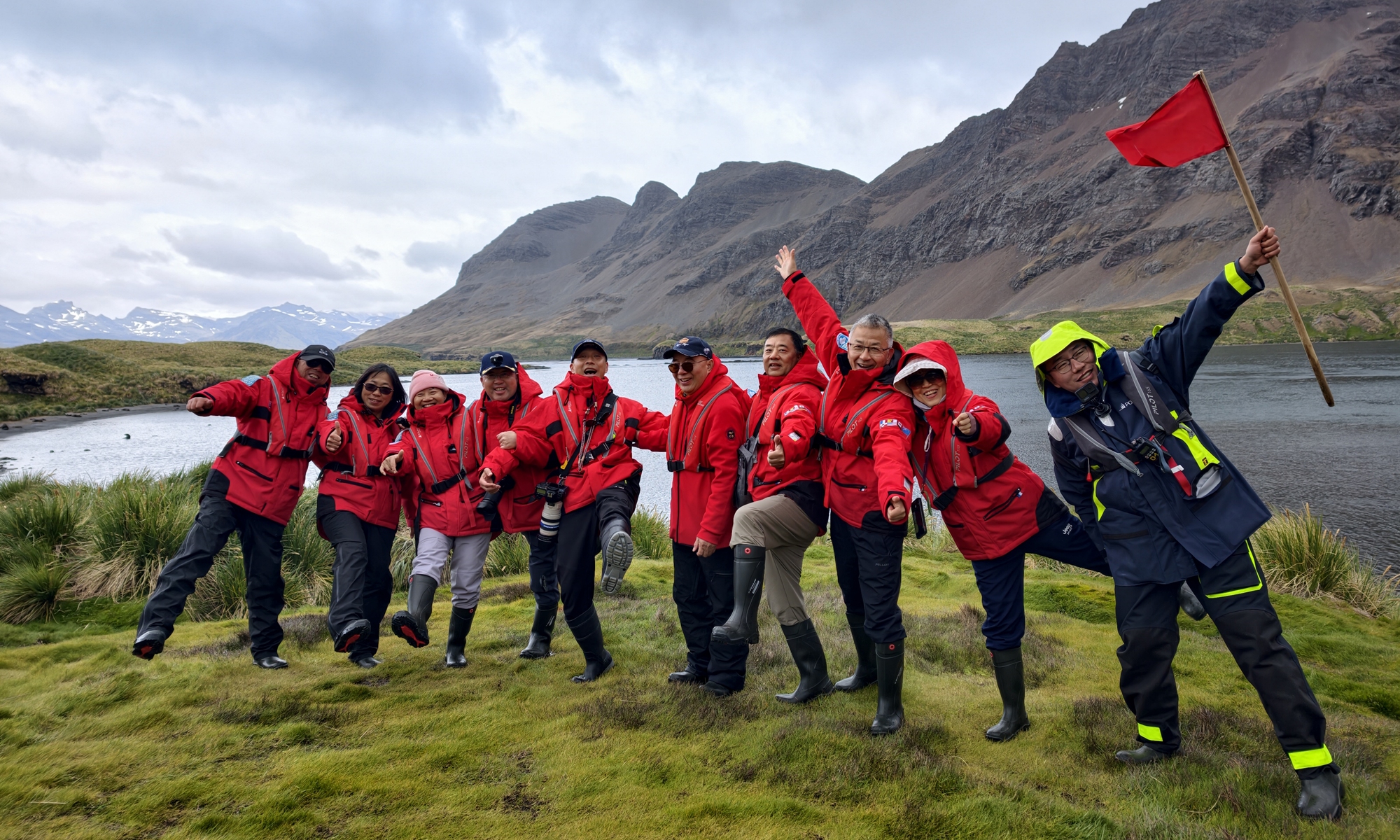
Chinese elderly tourists pose for a photo during a trip to Antarctica. Photo: Courtesy of Zhang XinyuanThe camera moves across ice and water of Greenland before settling on a group of travelers speaking Putonghua. Many are retired. They have come a long way from China to a place that, for much of their working lives, belonged more to maps and documentaries than to any realistic travel plan.
Polar journeys require money, good health and patience for long flights and itineraries that may change with the weather. Yet on ships bound for Antarctica, and tours reaching into the Arctic, retired teachers, doctors, researchers and business managers are becoming easier to find.
After decades scheduled around work and family, they now possess something that was once just as scarce as money: uninterrupted time.
By the end of 2025, China had 323.38 million people aged 60 or above, accounting for 23 percent of its population, according to the Xinhua News Agency. Their incomes, health and family circumstances vary enormously, and polar travelers remain a small, relatively affluent group. Still, their choices bring one change into sharp focus: For some among this new generation of retirees, growing older no longer means simply drawing the boundaries of life inward. It may also be a chance to return to journeys postponed for decades.
Behind every such journey lies a practical calculation: Is the body ready? Is the expense manageable? Can family responsibilities be set aside long enough? The answers are reshaping both travel products and ideas about life after work. At the farthest reaches of the map, some Chinese retirees are asking a new question: With their careers behind them and years still ahead, where do they want to go next?
No longer waitingIn early 2025, 63-year-old He Man stood on a snow-covered slope at Port Charcot in Antarctica and looked back toward the sea.
The Silver Endeavour, the ship that had brought her there, had shrunk to a white speck against the blue water. Penguins wandered nearby. "Standing there, I suddenly realized how small I was - and how small my problems were," she told the Global Times.
It was a journey He Man had postponed for most of her adult life. Before retiring, she was a deputy chief physician at the dental center of Shenzhen People's Hospital in Shenzhen, South China's Guangdong Province. During her 38-year medical career, most days she got up at 6 am, arrived at the hospital around 7 and began seeing patients at 8. On busy days, patients queued up outside her consulting room and she could barely stop for a drink of water.
During the last 20 years of her career, she had no more than 15 days of annual leave each year. Once time was set aside for caring for elderly relatives and looking after her child, what remained was enough only for short trips. She had visited several countries in Europe and North America, but Antarctica remained beyond reach.
"Antarctica had always been a dream, but I never really dared to imagine going," she said. The possibility became real only after friends from university made the journey in 2023 and 2024 and encouraged her to follow. By then, she had retired at 60. More important than anything else, she said, was that her time was finally her own.
In October 2024, she booked a place on an expedition ship carrying about 200 passengers. She went with her husband, a neighboring couple and another couple with whom they often traveled, forming a group of six.
The early-booking cruise fare exceeded 150,000 yuan ($22,250) per person. She and her husband later paid another 40,000 yuan each to upgrade their flights to business class.
"On a journey this long, at our age, we should treat ourselves well," she said. The flights between China and South America alone took more than 30 hours. The entire journey eventually lasted 41 days, combining an 11-day Antarctic cruise with visits to Argentina, Brazil, Peru and Chile. "Since we had flown so far, we wanted to see it all in one go."
The journey began with a lesson in polar uncertainty. To catch a period of calmer weather across the Drake Passage, the ship moved its scheduled departure from noon to 6 am.
The couple reached the port in Chile before dawn after barely sleeping, only to learn that replenishment and repairs had taken longer than expected. The weather window closed, and the captain diverted through the Beagle Channel while waiting two days for conditions to improve.
The retired doctor did not regard the delay as time lost. Marine biologists, ornithologists, geologists and polar historians delivered lectures on board throughout the day, while passengers watched the fjords outside. "There were many older people on the ship. We had time, and nobody was really in a hurry," she said.
When she finally stepped onto the Antarctic snow, she said she was so overwhelmed that she wanted to cry. The trip did not remove the pressures waiting for her at home, but it changed the scale on which she viewed them.
"When I feel stressed or upset now, I think of Antarctica," she said. "Life is only so long. Don't hold yourself too tightly. Let go when you should."
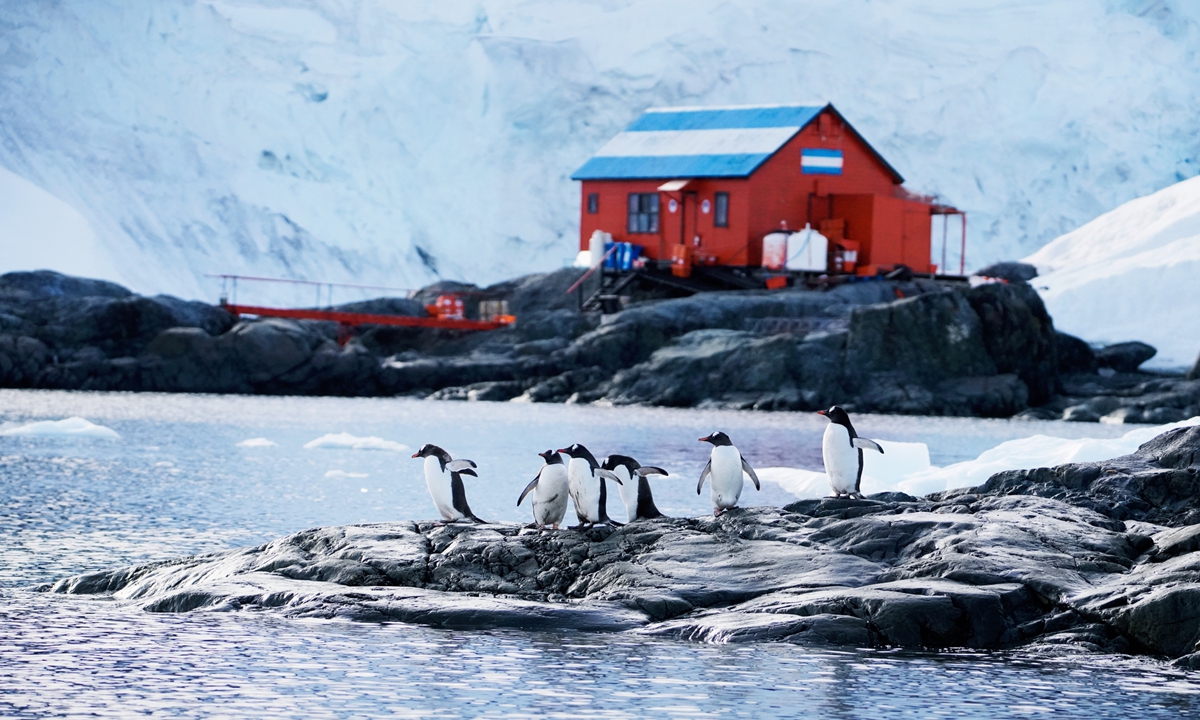
Scenery of Antarctica Photo: Courtesy of Zhang Xinyuan
Beyond one journeyAccording to He Man, people aged 60 or above accounted for more than half of the passengers on board, while Chinese travelers also made up more than half. After returning home, some of the travelers from Shenzhen created a WeChat group, while others had already begun discussing their next destination.
Travel agencies specializing in expedition cruises have noticed the same pattern. Zhang Xinyuan, founder and CEO of Newayer Cruises, told the Global Times that the company entered the Antarctic market in 2008 and sent its first group the following year. It has since served approximately 6,000 travelers on trips to the Arctic and Antarctica.
Among its customers, more than 65 percent are aged over 50, with those between 55 and 65 forming the largest group.
The makeup of that group has changed. Before 2020, Zhang said, most of the agency's polar customers were private business owners, senior executives and their family members. In recent years, the professional backgrounds of its customers have become more varied, with retired teachers, doctors, researchers and managers from public institutions increasingly represented. Retired women traveling alone have also become more visible.
Their journeys do not necessarily end after one polar voyage. Zhang once regarded Antarctica as a once-in-a-lifetime destination, but found that some customers continued on to the Arctic, the Galapagos Islands or wildlife reserves in Africa.
She cited a recently retired couple who booked trips to both Antarctica and the Arctic. While still aboard the Arctic cruise, they asked to reserve places on a southern Africa itinerary planned for the following year.
Industry data suggest that this is a growing, though still expensive, segment of the travel market. During the 2024-25 Antarctic season, Chinese nationals accounted for 10 percent of passengers traveling with operators belonging to the International Association of Antarctica Tour Operators, or IAATO, the second-largest share after the US.
In the 2025-26 season, IAATO operators recorded 85,195 visitors who landed in Antarctica and another 27,217 cruise-only passengers. The association said China had seen the greatest post-pandemic increase among the main sources of Antarctic travelers.
Data released by Tongcheng Travel offer a closer view of the high-end market. From January to September 2025, travelers aged between 50 and 70 accounted for more than 70 percent of users booking outbound luxury cruises on the platform. Among customers purchasing polar cruise products priced above 100,000 yuan, more than 90 percent were classified by the company as silver travelers.
As the customer base changes, the product is changing with it. Zhang said the longest flights, rather than the cruise itself, often present the greatest physical challenge. On board, travelers can decide whether to join shore landings, hikes or Zodiac cruises according to their physical fitness and health condition.
At Newayer Cruises, travelers aged between 75 and 80 are generally asked to provide medical documentation and travel with a family member. Its group products include emergency medical and evacuation insurance, while tour leaders accompany passengers from departure.
The agency has also added Chinese-language services and meals familiar to Chinese passengers, while leaving more space in itineraries rather than packing each day with activities. Flexibility is needed for reasons beyond the traveler's own health.
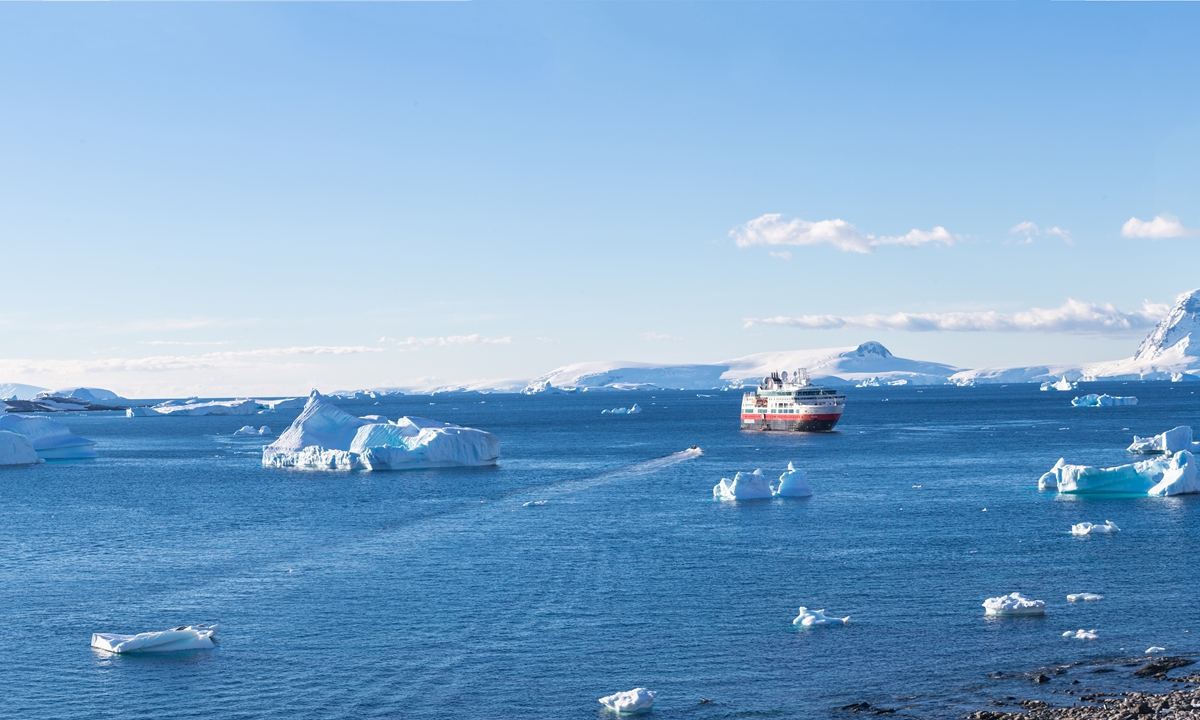
A ship sails among icebergs in Antarctica. Photo: VCG
The Arctic can waitPolar travel occupies the expensive outer edge of a much broader change in how older Chinese people spend their time. By the end of 2025, China had 323.38 million people aged 60 or above, accounting for 23 percent of the population. Those aged 65 or above numbered 223.65 million, or 15.9 percent.
The National Bureau of Statistics noted that people aged between 60 and 64 made up a relatively large part of the older population, and that many were still healthy and participated in social activities.
Travel is becoming one outlet for this age group. Data cited by the National Development and Reform Commission show that older travelers account for more than 20 percent of China's total tourist numbers.
Du Peng, dean of the School of Population and Health and director of the Institute of Gerontology at Renmin University of China, noted in a CCTV interview that more than 20 million people would enter old age each year over the following decade. Compared with earlier generations, he said, many would be better educated, assess their own health more positively and use the internet with greater ease.
Policy is beginning to respond to this more varied picture of old age. A State Council document on developing the silver economy calls for replacing rigid age restrictions on travel with assessments based more closely on health, while expanding travel insurance and strengthening consumer protection.
Still, the retirees boarding polar ships should not be treated as a portrait of all 323 million older Chinese people. They are a relatively small group able to meet three demanding conditions at once: sufficient savings, good health and control over their time.
Therefore, what these polar travelers demonstrate is not that every retirement should become an expensive adventure. Rather, they show that later life is becoming less uniform: rest and care remain essential, but for some people, retirement may also contain study, creative work, new friendships and journeys once postponed by jobs and family obligations.
Back in Shenzhen, He Man now divides her Xiaohongshu (RedNote) posts between dental-health advice and notes from her travels. Antarctica has been crossed off the list, but the list itself continues to grow.
She is considering a trip to see the animal migration in Africa and another to watch the aurora in Iceland. The Arctic is lower down on her list.
The Arctic can wait. This time, the delay is hers to decide.
。
윤여순 전 LG아트센터 대표 국내 1세대 여성 임원 출신‘2026 세계한민족여성네트워크 대회’ 기조연설 윤여순 전 LG아트센터 대표가 서울 중구 엠버서더서울 풀만 호텔에서 열린 '2026년 세계한민족여성네트워크(KOWIN) 대회'에서 기조 강연을 하고 있다. ⓒ성평등가족부"'여적여'(여자의 적은 여자)라는 단어 들어보셨나요? 저는 이런 용어는 없어져야 한다고 생각합니다. 바늘구멍만 한 기회를 주고 여자들끼리 잘해보라는데 피 튀기게 경쟁하지 않을 수 없습니다. 그리고 그 모습을 팔짱 끼고 바라보며 '여자들은 서로를 적대시하는 것 같아'라고 말하는 거죠. 설령 조직 내에서 그런 현상이 일어난다 하더라도 그 프레임에 우리의 몸과 영혼을 다 바칠 필요는 없습니다."윤여순 전 LG아트센터 대표(71)의 조언이다. LG그룹 첫 여성 임원이자 최초의 여성 최고경영자(CEO)라는 타이틀을 갖고 있는 윤 전 대표는 여성 리더가 전무하던 시절 기업 내 유리천장을 뚫은 인물로 평가받는다. 국무총리실과 성평등가족부, 노동부 자문위원 등도 지냈으며 현재는 코칭경영원에서 파트너코치를 맡아 활발한 활동을 이어가고 있다. 26일 앰배서더 서울 풀만 호텔에서 열린 '2026 세계한민족여성네트워크(KOWIN·코윈) 대회'에 기조 강연자로 나선 윤 전 대표는 여성 연대와 여성 리더 육성의 필요성을 강조했다. 이날 윤 전 대표는 "제가 자라나던 시절 한 가족의 평균 자녀 수는 6명이었다. 6명의 자녀 중 아들이 2명이라고 가정하면 나머지 딸 4명은 구로공단에 가서 일해야 했으며, 딸들 그 누구도 불평하지 않았다. 하지만 1980년대 이후 경제가 성장하면서 모든 가정에서 교육에 많은 투자를 하게 됐다. 지금은 산간벽지 어느 곳을 가도 딸이라는 이유로 교육을 시키지 않았다는 이야기를 듣기 힘들다"고 운을 뗐다. 윤 전 대표는 "경제협력개발기구(OECD)에 따르면 한국의 교육률은 높은 반면 여성의 노동참여율은 굉장히 낮다. 남녀임금격차도 OECD 회원국 평균보다 훨씬 크다. 무엇보다 여성 임원 비율은 OECD 회원국 중 꼴찌 수준"이라며 "교육률도 높고, 일하기 위해 준비된 여성이 많은데 왜 이들이 이렇게 갇혀 있어야 하는가"라고 물었다. 윤여순 전 LG아트센터 대표가 서울 중구 엠버서더서울 풀만 호텔에서 열린 '2026년 세계한민족여성네트워크(KOWIN) 대회'에서 기조 강연을 하고 있다. ⓒ김세원 기자윤 전 대표는 여성의 조직 내 성공을 가로막는 두 가지 원인으로 과열된 교육열과 조직 문화를 꼽았다. "교육이 마치 신분을 가르는 잣대처럼, 경제적 수준을 가늠하는 기준이 돼버렸습니다. 아이를 좋은 학교와 좋은 직장에 보내고 출세시키는 것이 우리 집안도 잘 되는 행복의 기준이 된 것이죠. 그러니 경쟁에서 살아남기 위해 '집에 있어야 하지 않을까', '아이 교육에 올인해야 하지 않을까'라는 생각을 하게 되는 것입니다. 대한민국은 아이가 대학에 입학할 때까지 엄마가 함께 해야 하기 때문에 일하는 여성에게는 악조건일 수밖에 없습니다."조직 문화와 관련해서는 "조직에서 끝까지 성공하는 여성 리더의 모습을 보기 어렵다"며 "많은 여성이 '내가 저 판에 뛰어든다 해도 남는 게 있나'라는 생각을 한다"고 지적했다. "쉽게 말해 학생 때 뛰어난 여성 동창이 열심히 일해도 끝내 임원을 달지 못한 반면 같은 과에서 그다지 똑똑하지 않았던 남학생들이 상무, 전무, 부사장 등을 지내며 승승장구하는 것과 같은 거죠."윤 전 대표는 인공지능(AI) 시대에 기업이 경쟁력을 갖추기 위해서는 여성 인재가 필수적이라고 강조했다. AI가 연산과 데이터 처리 방면에서 인간을 앞설지라도 창의성과 공감, 직관, 맥락적 판단에는 한계가 있으며, 이러한 역량을 발휘하는 데 여성이 상대적으로 강점을 지니고 있다는 이유에서다."불과 2~3년 전까지만 해도 모두가 엔지니어와 개발자들을 데려가기 위해 난리였지만 지금 이들은 감원 대상이 됐습니다. 이제 많은 기업이 인문학자를 모셔가려고 합니다. 창의성, 공감, 직관 등은 인간만의 능력이고, 여성이 태생적으로 굉장히 잘하는 부분이기도 합니다. 공감하고 소통하고 관계를 조율하는 것을 잘하는 남성도 있지만 일반적으로 여성의 강점이죠."또 윤 전 대표는 "비슷비슷한 사람끼리 모인다고 혁신의 불꽃이 될 만한 아이디어가 나오겠는가"라며 "더 많은 여성을 불러 다양한 구성원을 갖췄을 때 창의성도 불꽃 튈 수 있다. 여성을 더 많이 써야 한다"고 역설했다. 원민경 성평등가족부 장관이 26일 서울 중구 엠버서더서울 풀만 호텔에서 열린 '2026년 세계한민족여성네트워크(KOWIN) 대회'에서 참석자들과 기념촬영을 하고 있다. 이번 대회는 전 세계 한인 여성 리더 간 연대 강화와 차세대 여성 인재 발굴·육성을 위해 28일까지 열린다. ⓒ성평등가족부이미 선진국과 다국적 기업은 여성 리더십을 새로운 성장 동력으로 삼고 있다. 노키아는 이사회에서 대표성이 낮은(underrepresented) 성별의 이사 비율을 40% 이상 유지하는 것을 목표로 하고 있으며, 노르웨이는 2003년 세계 최초로 여성 이사 할당제를 도입했다. 유럽연합(EU)도 올해부터 여성 사외이사 할당제를 의무화했다. 윤 전 대표는 "세상이 이렇게 돌아가고 있는데, 한국에는 여전히 무의식적인 편견이 깊숙이 자리 잡고 있다"며 "여성이 성과를 내 중간관리자가 되면 그때부터 잔혹사가 시작된다. 여성에게는 공정한 기회가 주어지지 않는다"고 지적했다. "'일은 잘하지만 리더를 하기에는 어렵지 않을까?', '여성을 해외 지사장으로 보내는 것은 아니지' 등의 이야기를 하며 검증된 안전한 결정만 내리는 것이죠. 기회가 주어지지 않은 것인데 이는 결국 경험 부족이라는 평가를 받게 만듭니다. 또 9명의 남성과 1명의 여성이 있다고 할 때, 9명은 (정보를) 다 알고 있는데 여성은 모르는 경우가 있습니다. 남성들은 이미 흡연실에서, 회식을 하면서, 골프 회동을 하면서 다 이야기를 나눴기 때문이죠. 언제까지 이런 소용돌이 속에 발을 담그고 있어야 할까요?"이에 윤 전 대표는 남성들을 향해 '시혜'가 아닌 '상생'을 촉구했다. 그는 "베풀어준다는 생각을 하지 마라. 시혜가 아니라 상생해야 한다"며 "배려할 필요 없다. 그냥 같이 가자"고 말했다. 이어 "아직도 모든 조직의 탑 리더는 거의 남성이다. 이들이 모든 의사결정을 한다. 그 리더들이 솔선수범해야 한다"며 "우리가 글로벌 1등을 하기 위해서는 이 자원(여성)을 쓰지 않으면 안 된다. 빨리 눈을 떠야 한다"고 당부했다. 여성들을 향해서는 "먼저 다가가라"며 "먼저 손들고, 롤모델과 멘토를 찾아가라. 그러면서 롤모델이 돼라. 완벽해야 롤모델이 될 수 있는 것이 아니"라고 조언했다. 이어 "여러분이 회의에서 어떻게 발언하는지, 어떻게 헤쳐나가는지 여성 후배들이 지켜보고 있다. 그들에게 보여주고, 그들을 이끌어줘야 한다"며 "또 여성들끼리의 연대로만 끝내지 말고, 남성들을 설득해 지원군이자 동맹군으로 만들라"고 제언했다.。

二 |
Current article:http://hbgga.chaochangkuanbandangyogeseng.sbs/news/20260826_15643.html
Published on:02:41:00
